Multi-Omics & Decisions
The Blind Spot of Multiomics
Why context turns data into decisions
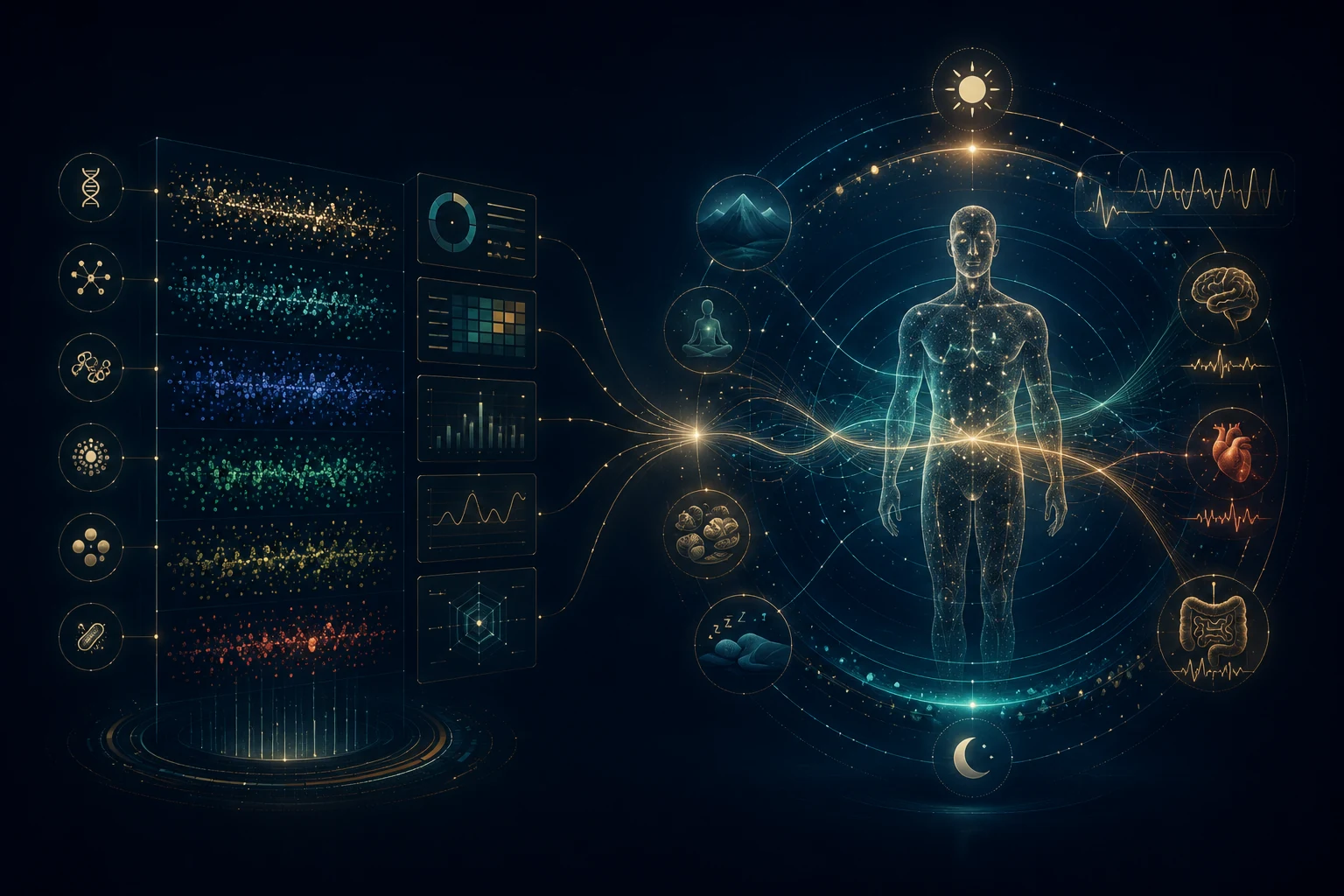
Multiomics is one of the strongest tools in modern prevention. Genomics, proteomics, metabolomics, microbiome data, epigenetics, and wearables can reveal what is happening in the body long before symptoms become clear.
But more data does not automatically lead to better decisions. A finding can be precise and still leave the most important question unanswered: what should happen next?
The blind spot is not measurement. It is context: when did a signal emerge, within which sleep, light, stress, meal timing, and sensory environment, and which intervention fits this system first?
Data are signals, not direction yet
An elevated inflammatory marker, a shifted microbiome, or an unusual metabolite pattern matters. But it is not automatically an instruction.
Without context, interpretation easily becomes linear: abnormal value, search for countermeasure. Too little of this, add more. Too much of that, reduce it. The logic is tempting, but the body rarely works that simply.
A biological value is always part of a system. It can be cause, consequence, compensation, adaptation, or a short-term response. That is why multiomics needs interpretation, not only analysis.
The body is not a lab value, but a situation
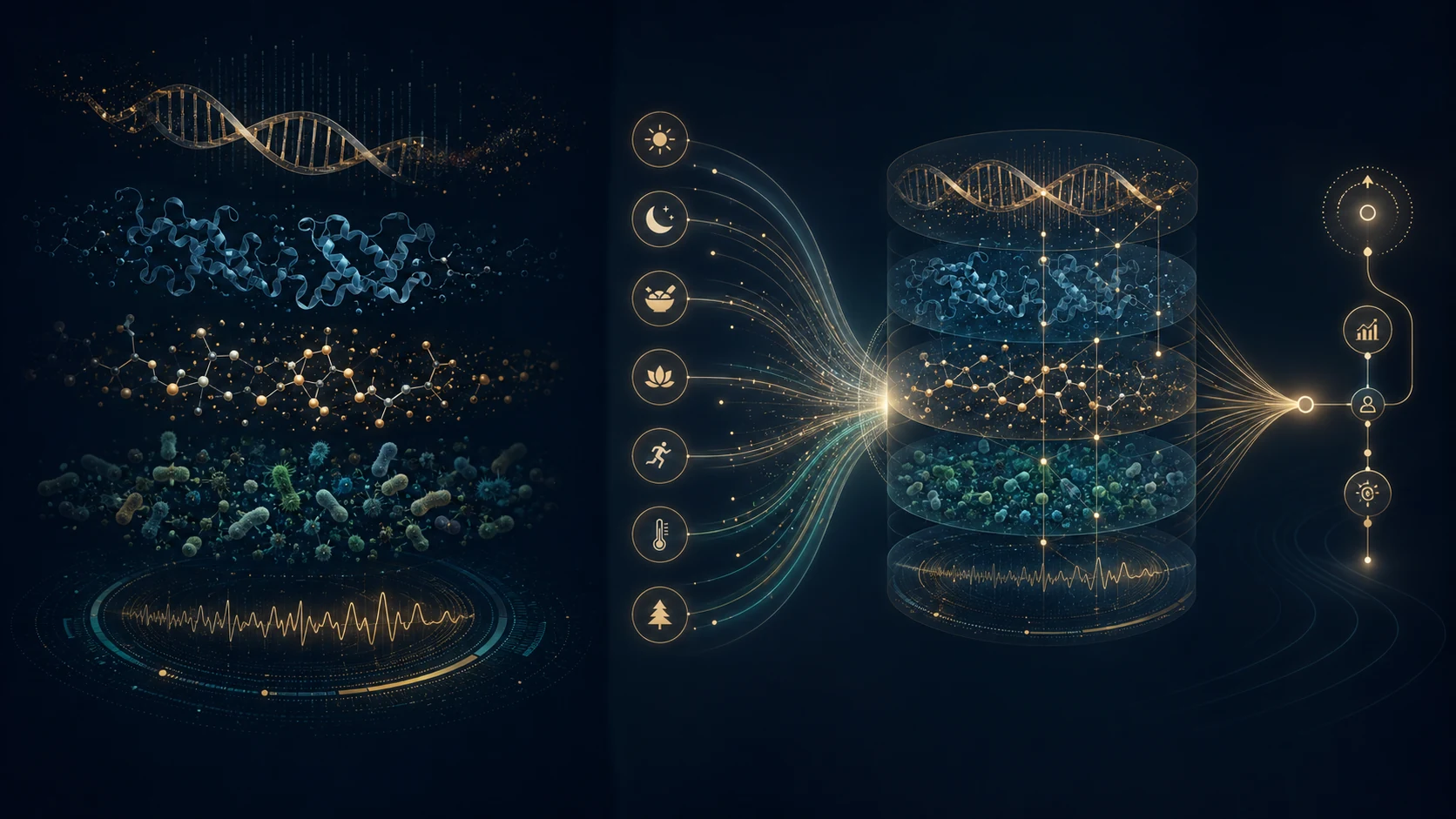
A lab value describes a slice. A situation describes the state in which that slice emerged.
Was the previous night restorative or fragmented? Was there morning light or mainly screen light? Was food eaten late? Was the day shaped by chronic stress? Was there movement, real recovery, temperature variation, nature contact, or sensory relief?
These questions may sound softer than omics data. Biologically, they are hard variables. They help determine whether a signal reflects activation, recovery, inflammation, adaptation, or overload.
The context compass
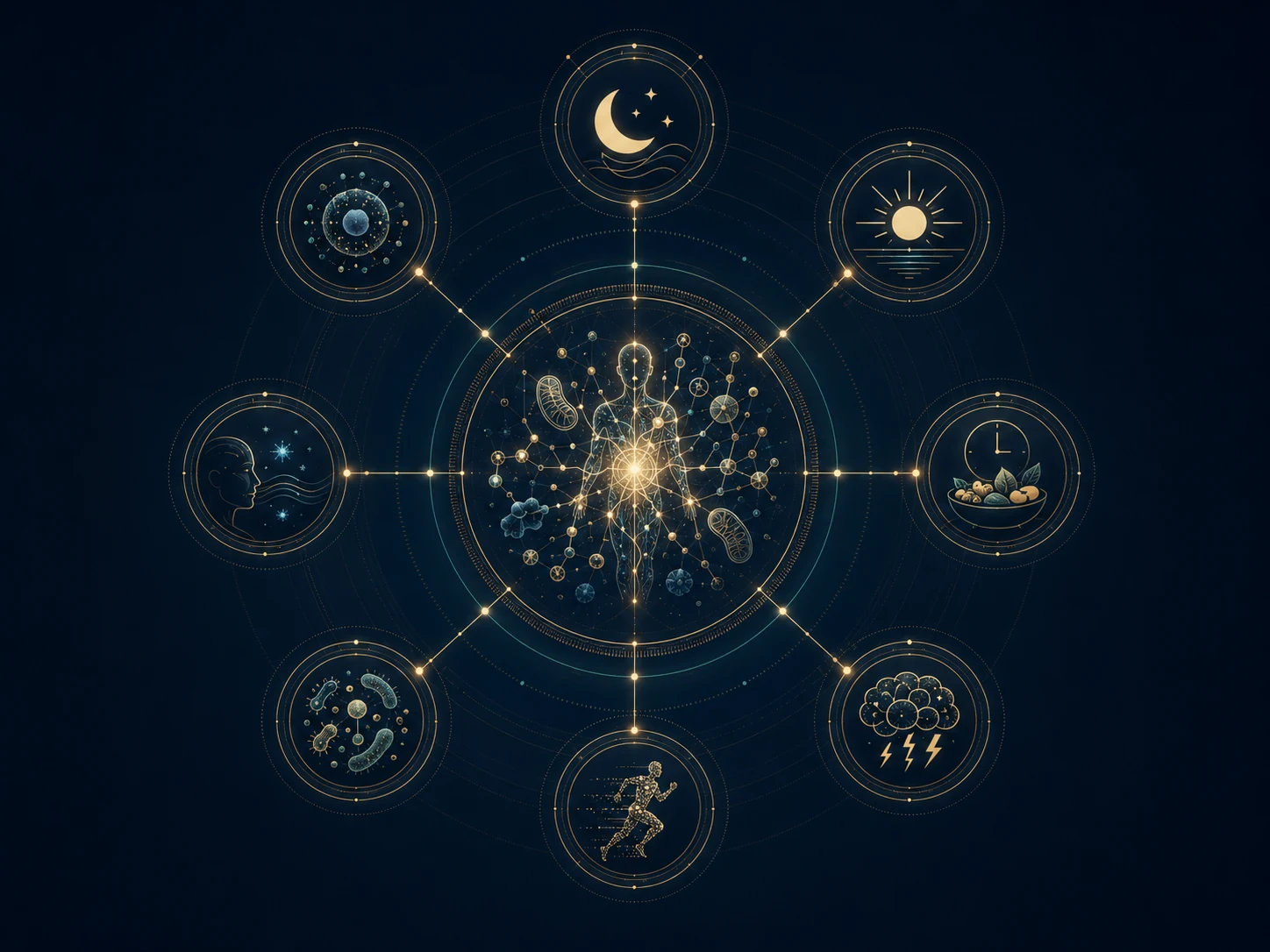
The next step is therefore not another isolated protocol, but a compass: which context dimension most likely explains the data, and which one is changeable first?
Sleep, light, meal timing, movement, stress load, microbiome state, inflammation, and sensory environment are not a wellness checklist. They are biological control axes.
A useful report should not only identify what is abnormal. It should help decide which axis needs to stabilize first.
Why more measurement does not always create more clarity
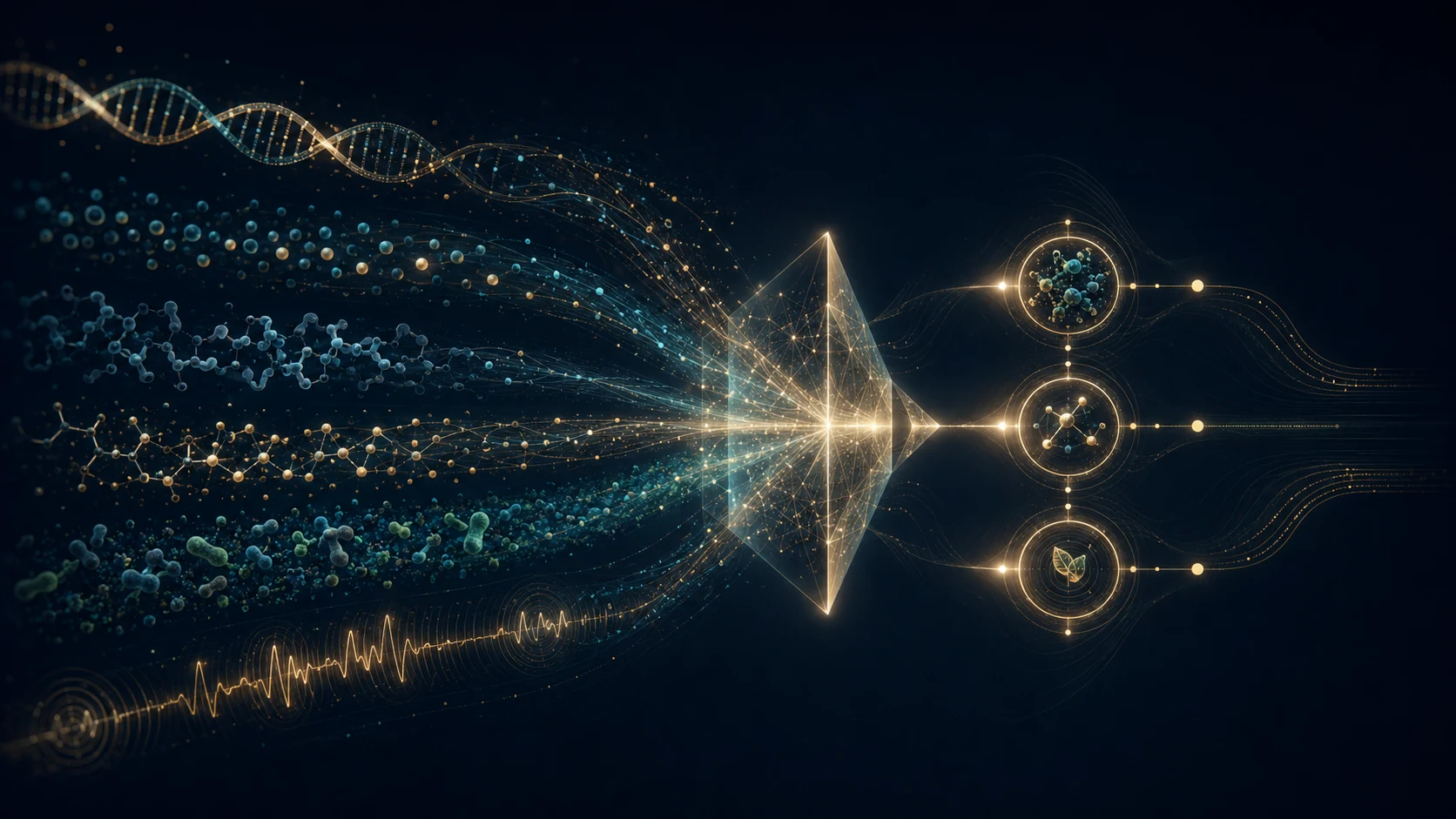
Many people already collect blood markers, genetics, microbiome tests, wearables, sleep data, HRV, glucose curves, and supplement plans. The problem is often not lack of data. It is lack of priority.
When every abnormality feels equally important, optimization becomes stressful. People pull ten levers at once and then cannot tell which one helped.
Precision therefore does not mean optimizing everything at the same time. Precision means finding the most plausible sequence.
From findings to priorities
The real value of multiomics is not the most beautiful dashboard. It is the better question: what is the next useful step?
Sometimes that step is not a supplement decision, but rhythm. Sometimes not another test, but sleep consolidation. Sometimes not harder training, but less inflammatory load. Sometimes not a complex protocol, but a clearer daily structure.
Data becomes decision when it is translated into a sequence: understand first, prioritize next, act, then reassess.
The question is not: what is optimal?
Many health decisions fail because they start with the wrong question. They search for the optimal value, the optimal dose, the optimal protocol.
For a living body, another question is often more useful: what fits this system state now?
This makes multiomics more practical and more human. It takes the data seriously, but does not force it into a mechanical checklist. It reads it as the response of a body to time, environment, sensory signals, load, and recovery.

Author
Dr. Josef Scheiber
Bioinformatician, data scientist, and founder
This article is a scientific synthesis for orientation. It does not provide individual diagnosis or treatment advice.
About the author →Scientific basis
Core sources
These sources support the central scientific concepts. Interpretations and the decision framework are the author's synthesis.
- 01Personal omics profiling reveals dynamic molecular and medical phenotypes. Cell, 2012
- 02A longitudinal big data approach for precision health. Nature Medicine, 2019
- 03Longitudinal multi-omics of host-microbe dynamics in prediabetes. Nature, 2019
- 04Integration of molecular profiles in a longitudinal wellness profiling cohort. Nature Communications, 2020
- 05Personalized Nutrition by Prediction of Glycemic Responses. Cell, 2015
Contact
Want to turn data into a clear sequence?
If you have multiomics, biomarker, microbiome, or wearable data and want to derive priorities instead of more isolated measures, the orientation call clarifies the most useful next decision.
Request orientation call