
Sense-Omics & Precision Medicine
Sense-Omics
The forgotten input layer before genes, proteins, and metabolites
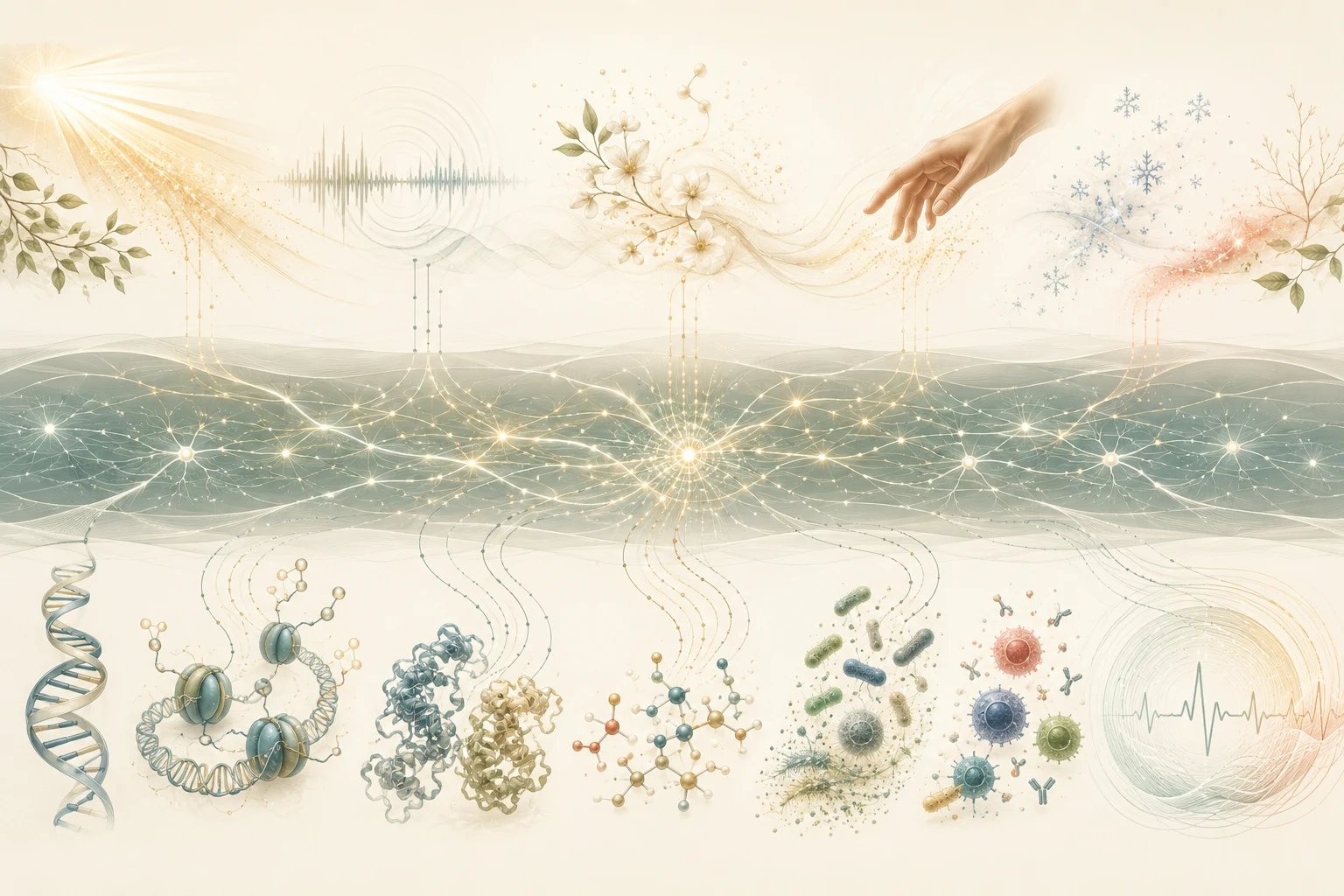
Modern biomedicine can look inside the body with unprecedented precision. Genomics reads the blueprint. Epigenomics shows which programs are active. Proteomics maps cellular operations. Metabolomics captures metabolic traces. The microbiome reminds us that regulation is never solitary.
These maps are powerful. But they have a missing entry point: they show the state of the body, but not always the signals that helped create that state.
This is where Sense-Omics begins. Not as a replacement for multiomics, but as the missing input layer: the systematic question of what the body perceives, how it processes those signals, and which biological programs follow.
The hole in the map
Imagine a map that shows every mountain, river, and city, but not a single harbor. The land is described with precision. But you cannot see how the world enters it.
Many omics datasets work in a similar way. They describe what is happening in the body: gene expression, proteins, metabolites, inflammatory markers, microbial patterns. But they do not automatically explain which input signals shaped those patterns.
Was there real morning light? Was there darkness at night? Did the acoustic environment signal safety or threat? Were there natural smells, temperature contrasts, touch, social closeness? Or was the day sensory-poor, contradictory, and mistimed?
The senses are not decoration
We often treat the senses as subjective experience: light feels pleasant or harsh, sound calming or irritating, smell beautiful or unpleasant. Biologically, that is too small.
Sensory stimuli are control signals. Light sets the circadian clock. Sound shifts autonomic regulation. Smells reach limbic and immune systems. Touch modulates stress axes, oxytocin, and vagal tone. Temperature trains protective programs through hormesis.
The body does not receive these signals passively. It interprets them. It asks: Am I safe? Is it day or night? Should I activate or repair? Is challenge useful, or is the system already overloaded?
The exposome measures dose. Sense-Omics asks about processing.
The exposome is a powerful concept. It asks which environmental factors a person is exposed to: pollutants, chemicals, UV radiation, nutrition, noise, social factors. That matters.
But exposure is not the same as biological meaning. Two people can sit in the same office, hear the same noise level, and see the same light. For one, it is suboptimal but tolerable. For the other, it is another stressor in an already narrowed tolerance window.
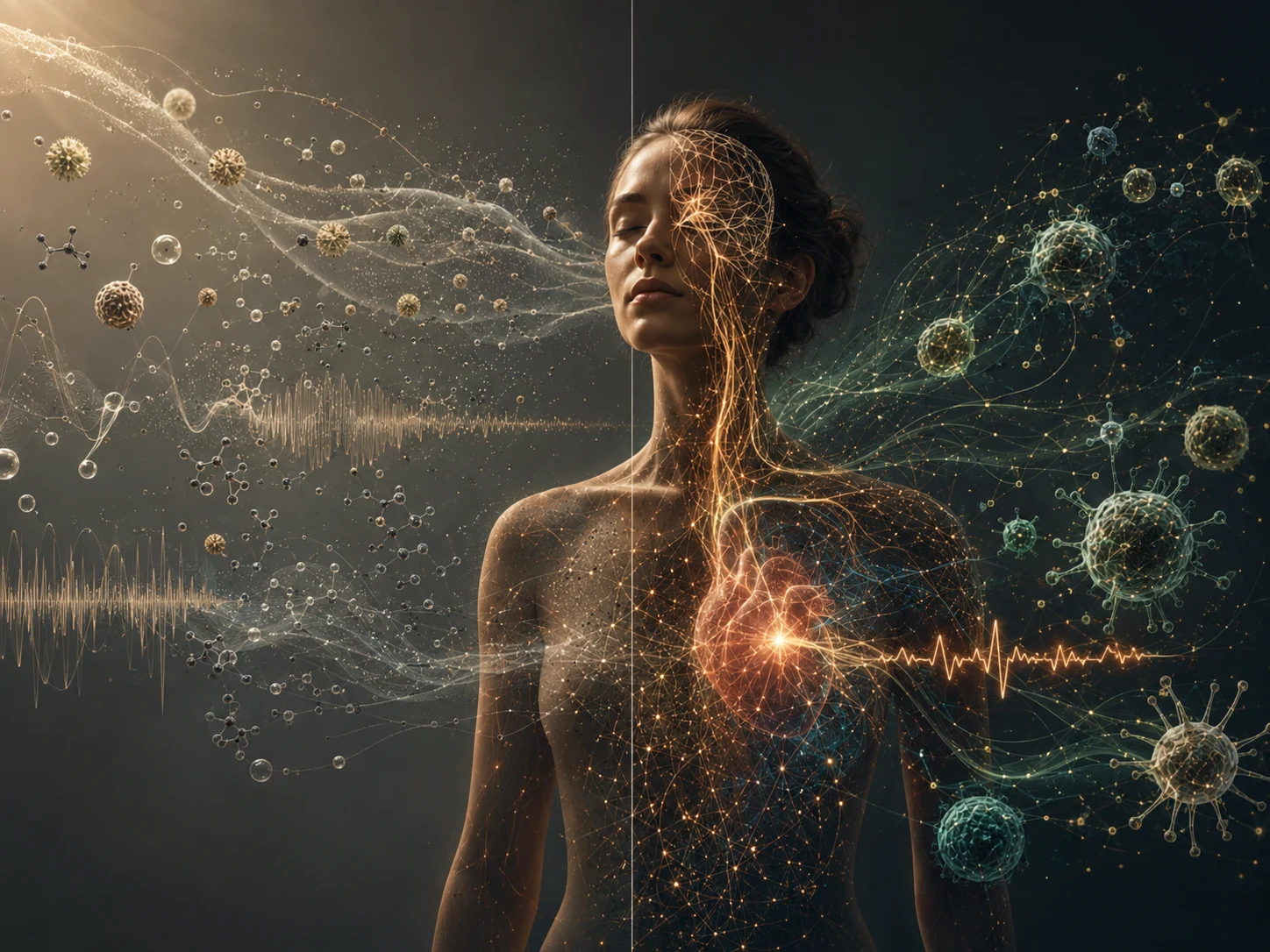
Sense-Omics sits between the exposome and classical omics. The exposome describes what reaches the body. Multiomics describes what becomes measurable inside. Sense-Omics asks how the translation works in between.
Why this makes multiomics more precise
An elevated inflammatory marker can have many causes. So can a disrupted glucose curve or a shifted microbiome. Without context, every finding can look like an isolated problem.
Sense-Omics changes the question. Not only: which marker is abnormal? But: what signal environment is this body living in, and which programs are repeatedly being activated?
This does not make multiomics less molecular. It makes it more precise. The data stays central, but it is read as the response of a system to input signals, rhythm, load, and regeneration.

Author
Dr. Josef Scheiber
Bioinformatician, data scientist, and founder
This article is a scientific synthesis for orientation. It does not provide individual diagnosis or treatment advice.
About the author →Scientific basis
Core sources
These sources support the central scientific concepts. Interpretations and the decision framework are the author's synthesis.
- 01The exposome and health: Where chemistry meets biology. Science, 2020
- 02Human Olfactory Receptors: Novel Cellular Functions Outside of the Nose. Physiological Reviews, 2018
- 03Widespread ectopic expression of olfactory receptor genes. BMC Genomics, 2006
- 04Functional roles of the sweet taste receptor in oral and extraoral tissues. Current Opinion in Clinical Nutrition and Metabolic Care, 2014
- 05Taste receptors in innate immunity. Cellular and Molecular Life Sciences, 2015
Contact
Want to translate Sense-Omics into data?
If you want to connect multiomics, biomarkers, or wearable data with light, sleep, rhythm, sensory environment, and system state, the orientation call clarifies which questions matter first.
Request orientation call