System State & Intervention
Why Protocols Fail
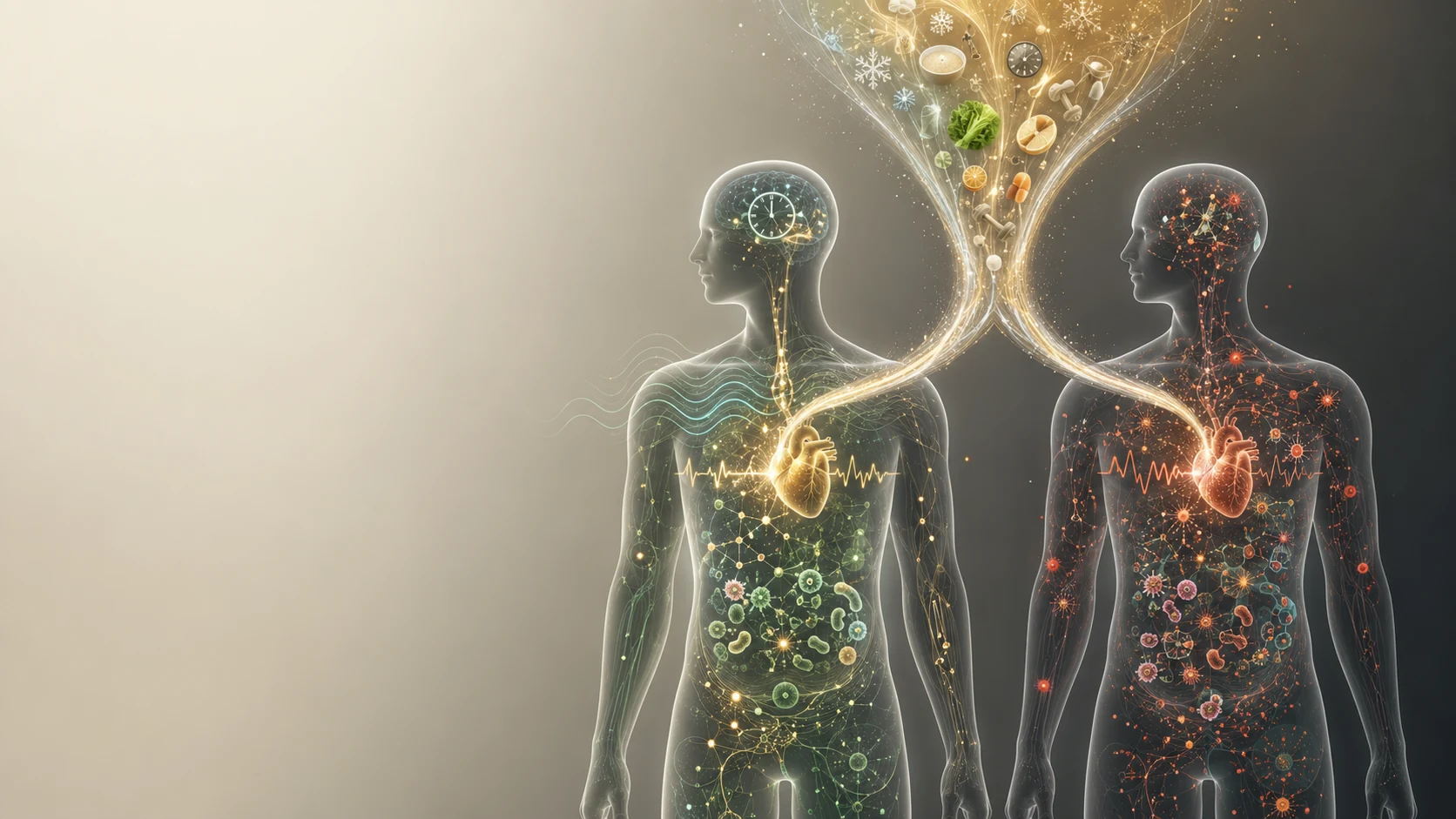
The same stimulus, a different body, a different result
Two people begin the same protocol. Both sleep more, take cold showers, fast for sixteen hours, take the same supplements, and train according to the same plan.
After four weeks, one feels clearer, stronger, and more resilient. The other is irritable, sleeps worse, feels colder, recovers poorly, and wonders why a healthy protocol made things harder.
The usual explanation is discipline, genetics, or compliance. Sometimes that is true. But often the more important question is missing: what state was the body in when it received the stimulus?
A protocol describes the stimulus, not the receiver
Health protocols sound precise because they define quantities, windows, and frequencies: ten minutes of cold, an eight-hour eating window, three strength sessions, this dose, that timing.
But even a good protocol usually describes the intervention more precisely than the body receiving it.
A stimulus never arrives in a vacuum. It lands on sleep quality, inflammation, stress axes, energy availability, microbiome state, hormonal rhythm, nervous system tone, previous experiences, and sensory environment. The same stimulus can be training or overload.
The tolerance window decides
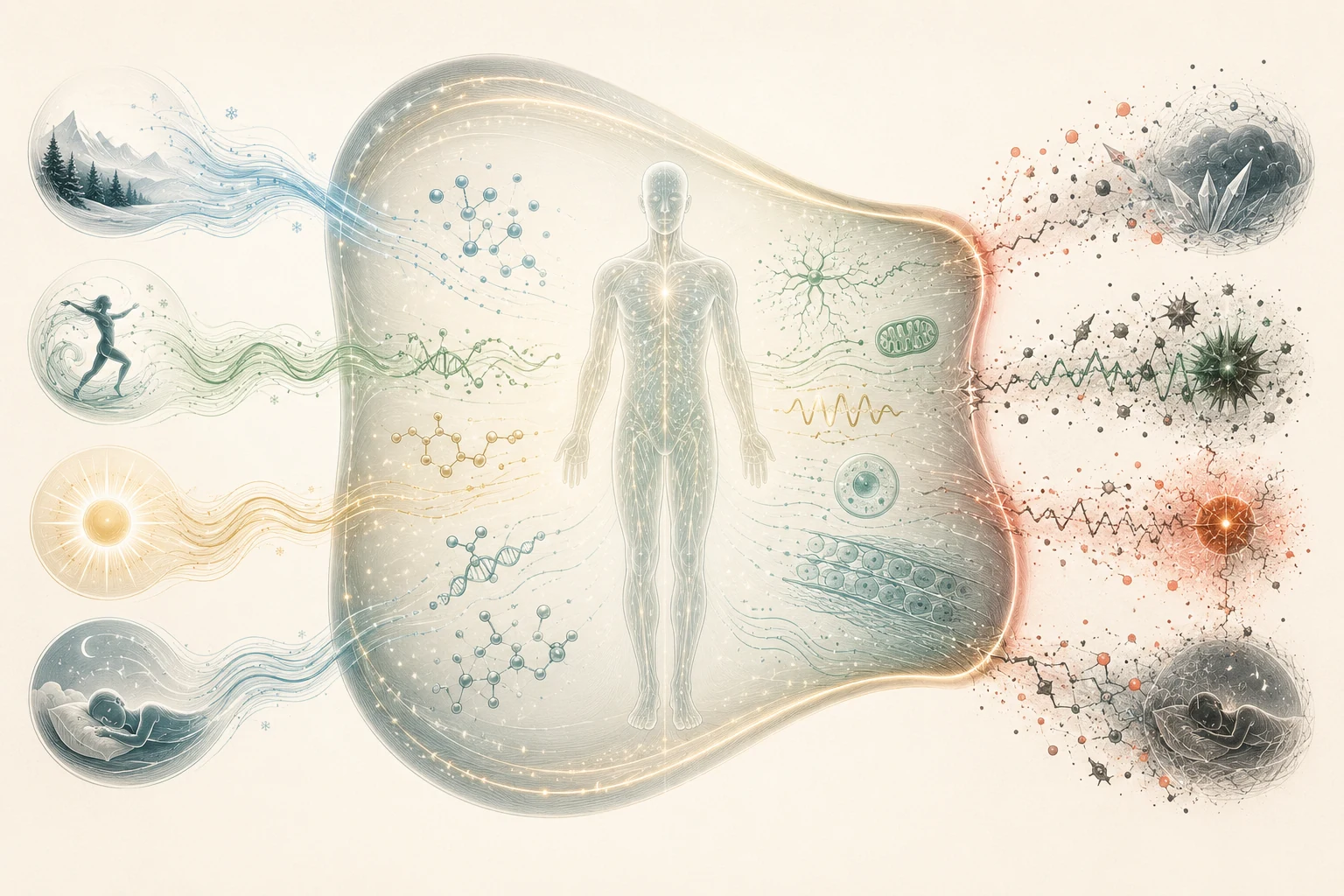
A body can only use the stimuli it can process. If the system is stable, an adaptive stimulus can widen the window: cold feels activating, training builds capacity, fasting improves metabolic flexibility.
If the system is already under load, the same stimulus can do the opposite. Cold becomes another stressor, fasting becomes underfueling, training becomes another inflammatory signal, and the perfect plan becomes a path into dysregulation.
This is not an argument against cold, fasting, sauna, exercise, or supplements. It is an argument for sequence.
Multiomics shows the available capacity
This is where multiomics and biomarkers become useful: not as data accumulation, but as a way to estimate current capacity.
Inflammatory markers can show whether the immune system is already vigilant. Metabolomics may reveal energy availability, stress metabolism, or missing recovery. Microbiome data can indicate whether fasting or dietary changes are likely to be tolerated. Sleep architecture, HRV, and temperature trends show whether the body still regulates flexibly.
The key question is not which value is optimal. It is how much adaptive load this system can carry now.
Sense-Omics explains why context matters
The sensory environment matters too. Running in a forest and running on a treadmill under cold artificial light are not physiologically identical, even if heart rate and duration match.
One stimulus is embedded in daylight, natural sounds, scent, temperature variation, and spatial coherence. The other often arrives in sensory sameness: artificial light, machine noise, dry air, no nature contact.
The body does not only react to mechanical load. It reacts to the total signal. That total signal helps decide whether a stimulus is processed as useful, safe, and integrable.
From tests to the right sequence
The practical consequence is simple: not every good protocol is a good protocol now.
Sometimes rhythm comes first: sleep, light, meal timing, real recovery. Sometimes nutrition and energy availability come first. Sometimes inflammation needs to calm first. Only then does a stronger adaptive stimulus make sense.
Good prevention therefore does not ask what the best protocol is. It asks what the next fitting step is for this system.


Author
Dr. Josef Scheiber
Bioinformatician, data scientist, and founder
This article is a scientific synthesis for orientation. It does not provide individual diagnosis or treatment advice.
About the author →Scientific basis
Core sources
These sources support the central scientific concepts. Interpretations and the decision framework are the author's synthesis.
- 01Protective and damaging effects of stress mediators. New England Journal of Medicine, 1998
- 02Personalized Nutrition by Prediction of Glycemic Responses. Cell, 2015
- 03Human postprandial responses to food and potential for precision nutrition. Nature Medicine, 2020
- 04An Overview of Heart Rate Variability Metrics and Norms. Frontiers in Public Health, 2017
- 05Model of personalized postprandial glycemic response to food. American Journal of Clinical Nutrition, 2019
Contact
Which intervention fits now?
If you already use data, tests, trackers, or protocols and want to turn them into a useful sequence, the orientation call clarifies the next fitting step.
Request orientation call