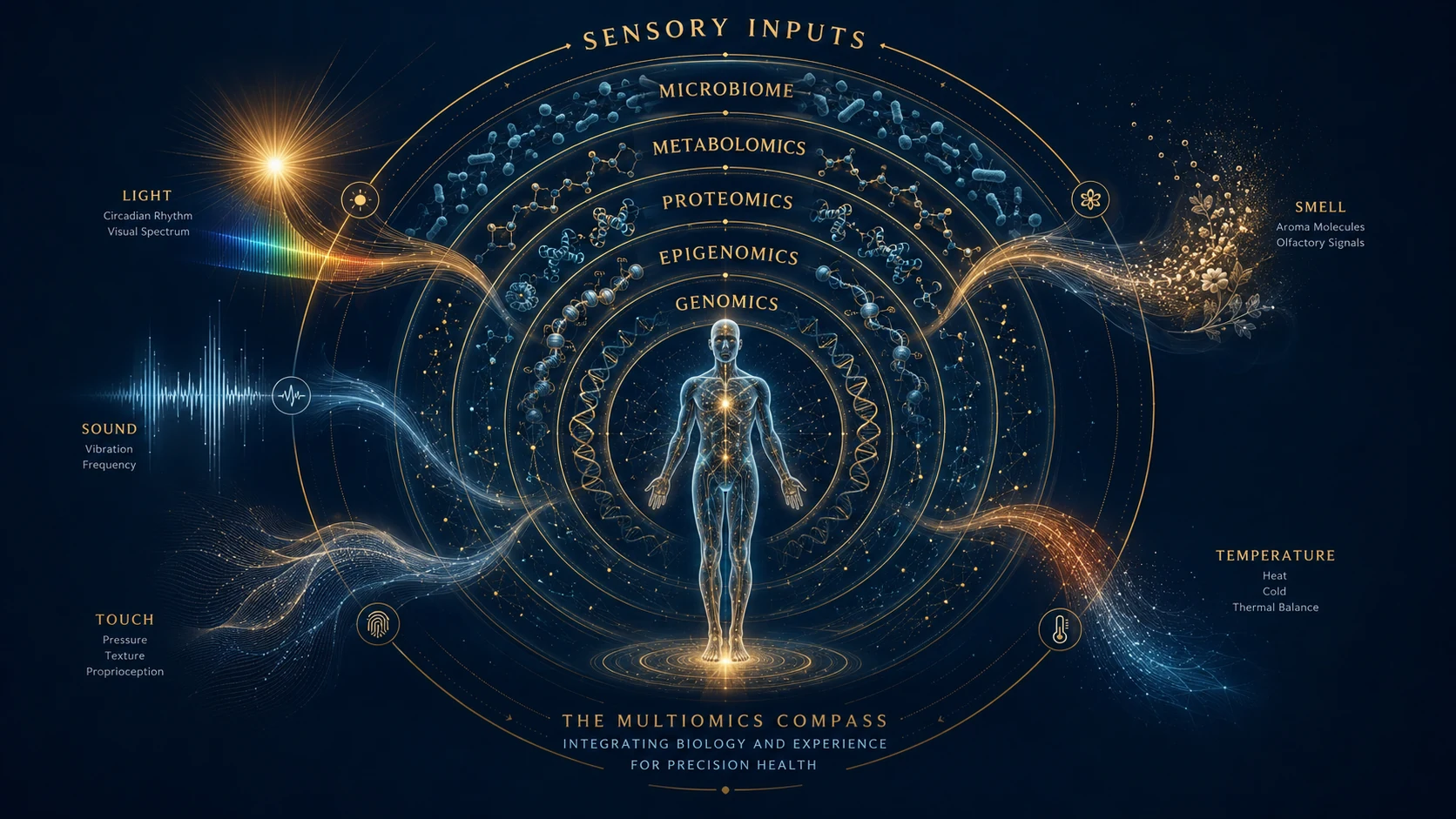
Many health data points. One clear sequence.
I help you interpret existing biomarkers, genetics, microbiome, and wearable data and prioritize the next useful questions.

Dr. Josef Scheiber
Bioinformatician · Data Scientist · Founder
50+
publications
2,000+
citations
20+
years of experience
Does this sound familiar?
More measurements have not automatically made the decision easier.
The data may be valuable. What matters is which claims it can support, which context is missing, and what can usefully follow.
01
Results without sequence
Many values exist, but relevance, urgency, and connections remain unclear.
02
More options than clarity
Tests, supplements, trackers, and protocols create possibilities without priority.
03
Better questions needed
You want to prepare more focused conversations with physicians and make uncertainty visible.
My perspective
Not every abnormal value is the most important value.
Multiomics becomes useful when molecular signals, trajectories, daily context, and measurement quality are considered together. The result is decision support, not remote diagnosis.
Review
Which data, symptoms, goals, and previous steps actually exist?
Interpret
Which signals are robust, which depend on context, and where are the important gaps?
Prioritize
What matters now, what can wait, and which question should be clarified next?
The outcome
Data overload becomes a manageable decision map.
01
Priorities
The few topics that genuinely matter for the next decision.
02
Open questions
A clean separation of robust signals, uncertainty, and missing context.
03
Next steps
A useful sequence for clarification, observation, or physician discussion.
Best entry point
Data orientation: what really matters?
We clarify the decision, review the available data, and structure the next useful steps in a focused format.
A compact decision roadmap instead of another disconnected list of recommendations.
Pre-clarification · analysis · strategy session · roadmap
Request data orientationScientific orientation, not medical treatment
The work can structure data and prepare better questions for physician discussion. It does not replace diagnosis, treatment, or emergency care.